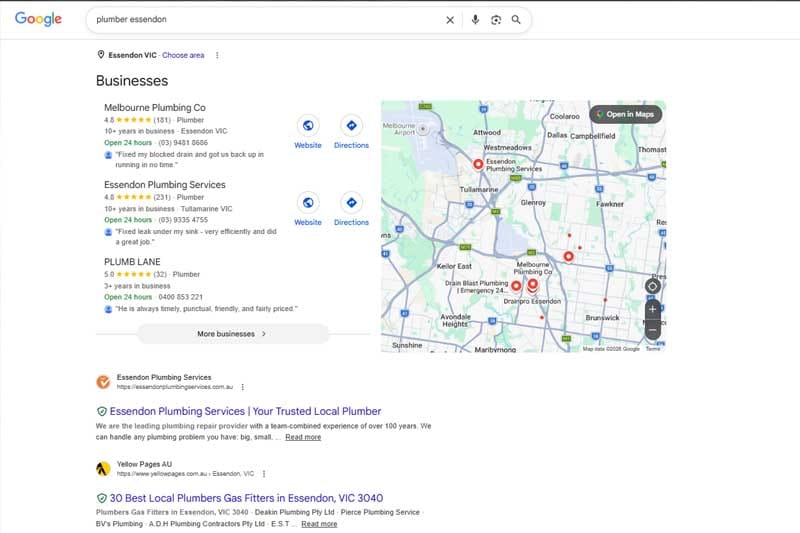
Essendon Business Owners: Here’s Why Your Competitors Rank Higher Than You
If you run a business in Essendon and you’re not showing up when locals search…

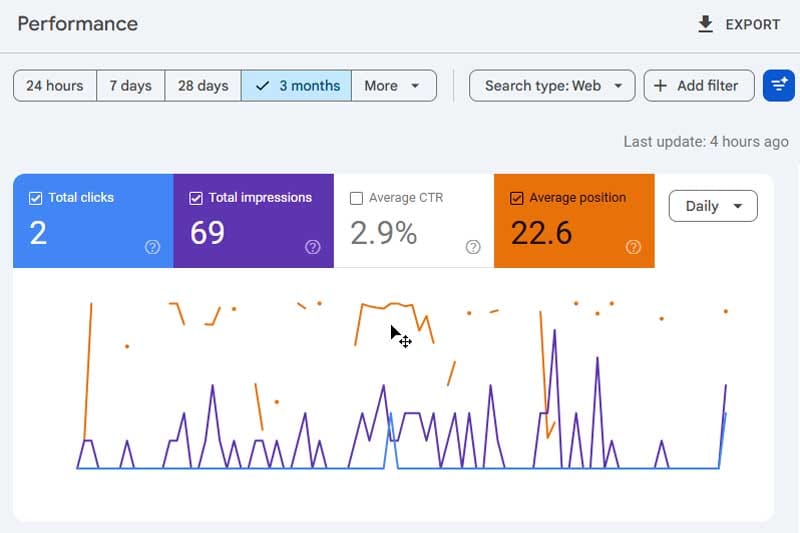
If your new website has no traffic and you’re not sure why, the most likely answer is that nothing is actually wrong. That’s genuinely the most useful thing I can tell you, because once you understand what’s happening, you’ll stop looking for something to fix and start doing the things that actually move the needle.
Most people launch a website expecting Google to start sending them customers fairly quickly. When that doesn’t happen, the instinct is to assume something broke during the build, or that there’s a setting somewhere that needs adjusting. In most cases, the site is working exactly as it should be. The problem is just that being live on the internet and being visible in search results are two completely different things, and it takes time to get from one to the other.
When your site goes live, Google will eventually find it and add it to its index. That part is mostly automatic and happens within days or weeks, especially if you’ve submitted a sitemap through Google Search Console. But being in Google’s index is not the same as being recommended by Google. When someone in your area searches for a plumber or a dog trainer or a pilates class, Google isn’t showing them every site it knows about. It’s showing the ones it has decided to trust, and trust is something that builds over time based on a lot of different signals.
I had a client, a digital marketing consultant based in the Latrobe Valley, who launched a well-built site and started seeing data in Search Console within a few weeks. Impressions were coming in for their target keywords, which looked like something was working. But when we looked at the actual ranking positions, they were sitting at position 38 for their main keyword. That’s page four, and about 75% of people never go past the first page of results. Google knew the site existed, but no real person searching for their services was finding them. Zero clicks despite being technically indexed.
The most common reason is simply domain age. Google treats a domain that was registered last month very differently from one that has been around for a few years. There’s a settling-in period of roughly three to six months where even a well-built, properly optimised site won’t move much in the rankings. Some people call this the sandbox effect. It’s real, and there’s no way to shortcut it. You accumulate history by existing and publishing consistently, and there’s no substitute for that.
Content depth is usually the second issue. A dog trainer whose homepage lists their service offerings has done the minimum, but that’s not what earns a ranking. Google is looking for content that genuinely answers what people are searching for, and a page that describes your services in general terms doesn’t do that as well as a page that goes into real detail about what your clients struggle with, what the process looks like, and what they can expect from working with you. Useful and specific content consistently outranks content that’s just descriptive.
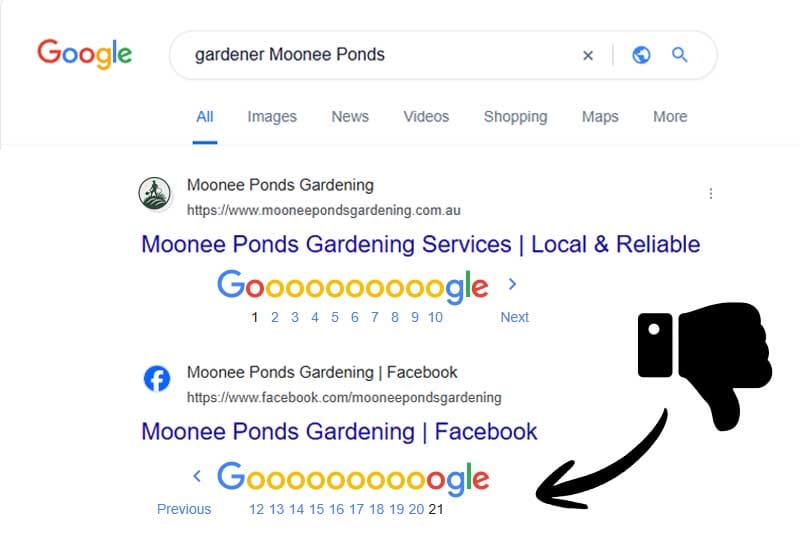
Keyword targeting is also where a lot of new sites quietly go wrong without realising it. A pilates instructor naturally wants to rank for “pilates Melbourne” because that’s the obvious term, but that search is dominated by studios that have been online for years with large content libraries and hundreds of other websites linking back to them. A new site competing for that keyword is up against businesses that have been building authority for a decade. The more effective approach for a new site is to target specific local terms first, because “reformer pilates Ascot Vale” has far less competition and is also a better match for what nearby customers are actually searching when they want someone local. Broader terms become achievable once you’ve built some authority, but starting there usually means starting with no results. This is something we work through from the beginning when we build new websites for Moonee Valley businesses, because the right keyword foundations at the start make a real difference to how quickly a site can start ranking.
Local signals are the fourth piece, and they’re often missing from new sites entirely. For a service business operating in a specific area, whether that’s a plumber in Essendon or a yoga studio in Moonee Ponds, Google needs to be confident about where you work and who you serve. A fully configured Google Business Profile is the most important part of this, and by fully configured I mean photos, services listed, service areas set, and at least a few real reviews from actual customers. Consistent listings in local directories like True Local and Yellow Pages also help, because they provide external confirmation of your business details. And your website content itself needs to reference your area naturally throughout the pages, not just in a footer address. A plumber whose service pages mention the specific suburbs they work in, in context, is sending a much clearer local signal than one where the address only appears in small text at the bottom.
When a site isn’t getting traffic, it’s tempting to start digging through technical settings looking for something to fix. Some of this is genuinely worth doing early on. Setting up Google Search Console and submitting your sitemap in the first week is worthwhile because it formally introduces your site to Google and speeds up indexing. But beyond that, I’ve seen people spend weeks adjusting plugin settings and checking robots.txt files on sites that were completely fine. The issue wasn’t technical; the site was just new.
We ran into a confusing moment on the Latrobe Valley project when a Google search for the site was returning a snippet describing “30 plumbing professionals.” The site had nothing to do with plumbing. It had been built on a template from an earlier project and Google had cached that version before the new content was fully in place. The front end looked perfectly correct, but Google was describing a different business entirely. It looked alarming, and it turned out to be nothing more than a caching lag. Submitting the updated pages through Search Console for re-indexing fixed it within a few days.
I also worked with a health blog called Hip Health Professionals, based in Melbourne, whose owner got in touch with the same question most people have at this stage: why isn’t my website getting any organic traffic? The site looked professional, the content was there, and nothing was technically broken. The honest answer was that the site was only a few weeks old and hadn’t yet earned visibility in search results. There was nothing to fix in the traditional sense. The site just needed time and consistent work.
While you’re waiting for domain authority to build, there are things worth doing that will move things along faster. Getting your Google Business Profile properly set up is the quickest win, because map results tend to appear faster than organic rankings for new sites. Fill it out completely with photos, services, service areas, and opening hours, and start asking real customers for reviews as soon as you can.
Getting listed in the main local directories is also worth doing early. True Local, Yellow Pages, and localsearch.com.au give Google consistent external signals that your business is legitimate and local, which matters more than most people expect.
Going back through your service pages and making them more specific will help too. The more your content reflects what local customers are actually searching for, rather than just describing what you offer, the stronger the signal you’re sending to Google.
Publishing blog posts that answer the specific questions your customers search for is the other big lever. Every post is another entry point into your site from search, and posts that link back to your service pages help build the topical authority that moves your rankings over time. This is a big part of why we offer ongoing website care plans, because the work that builds search visibility is ongoing and compounds with consistency.
For the technical side, the short list of things actually worth doing early is to submit your sitemap through Google Search Console, use the URL Inspection tool to request indexing on your key pages, and check that those pages are actually being indexed. Once that’s done, the most productive thing you can do is keep adding useful content and building local signals, rather than continuing to look for technical problems that probably aren’t there.
Meaningful local ranking movement typically takes four to six months of consistent effort, and real organic traffic from a new domain is more like six to twelve months away. If your site launched in the last few months and traffic is flat, timing is almost certainly the explanation.
That said, waiting around for SEO to kick in while doing nothing else is how you end up with a six month gap between launch and revenue. The businesses that do best in the early months are usually running direct outreach alongside their SEO work, talking to people in their networks, asking existing customers for reviews, being visible in local community groups, and following up with anyone they’ve worked with before. SEO builds the pipeline for later. Direct outreach fills it now. They serve different timeframes and you need both running at the same time.
If you want to talk through where your site is at and what’s worth doing next, get in touch here and we can take a look together.
Let's talk about your website and online presence. We'll talk about what's working (or not), and figure out if I can help your business get more customers online.
 Naomi Hermans
- Your website person -
Naomi Hermans
- Your website person -